Showing posts with label widget. Show all posts

Friday, February 16, 2018

M0026: Leo et Vulpes Territa


M0025 - M0026 + English - M0027

26. Leo et Vulpes Territa. Vulpes, cum numquam leonem vidisset, postquam olim forte in eum incidit, primo quidem intuitu ita perterrefacta est ut parum abfuerit quin periret. Rursus autem eodem obviam reperto, tunc etiam, sed non ut antea, timuit. Tertio demum ipsum conspicata, audax ita fuit ut, accedens, cum eo colloqueretur. Quae terribilia sunt, consuetudo blandiora reddit.

Vulpes et Leo (De Familiaritate)

Click here for a SLIDESHOW of all the Griset images.

M0026 = Perry010. Source: De Furia 7. This is Perry 10. Compare the story of the people and the camel, #144.

26. The Lion and the Frightened Fox. The fox, who had never seen a lion, when she first encountered him by chance, at the first sight was so thoroughly terrified that she all but perished on the spot. The second time, however, that she ran into him, she was frightened again, but not so much as before. Finally, the third time that she saw him, she was so bold as to come up and hold a conversation with him. Things which are terrifying are rendered more agreeable by familiarity.

Sunday, January 21, 2018

M0025: Leo Senex et Vulpes


M0024 - M0025 + English - M0026

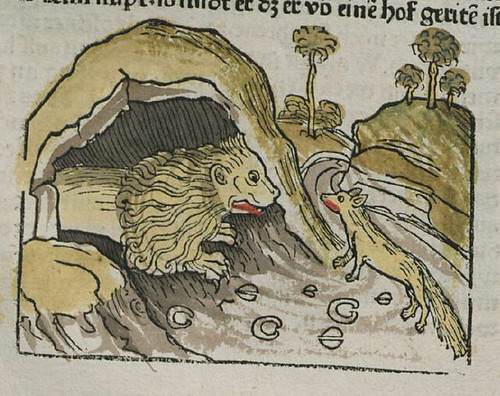
25. Leo Senex et Vulpes. Leo, defectus annis, recubabat in spelunca sua et aegrum simulabat. Visitatum regem complures venerunt bestiae, quas protinus devoravit. Accessit etiam vulpes, sed cauta ante speluncam procul stabat, salutans regem. “Cur non intras?” interrogavit leo. Vulpes respondit, “Quod video vestigia intrantium multa, at nulla exeuntium.”


leo et vulpes

Click here for a SLIDESHOW of all the colored Steinhowel images. You can see the artist has even drawn in some of those tell-tale animal tracks!

M0025 = Perry142. Source: Gildersleeve 7. This is Perry 142. For an animal who foolishly approaches the lion not once but twice, see the story of the “heartless” donkey, #236.

25. The Old Lion and the Fox. A lion, worn out with age, lay in his cave and pretended to be sick. Many animals came to visit their king, whom he immediately devoured. The fox also came, but stood cautiously in fromt of the cave, greeting the king. "Why don't you come in?" asked the lion. The fox replied, "Because I see many tracks of those going in, but no tracks of those coming out."

Monday, January 15, 2018

M0024: Leo Senex, Gemens


M0023 - M0024 - English - M0025

24. Leo Senex, Gemens. Leo, gravatus aetate et febribus, iacebat, spiritum trahens extremum. Supervenit aper spumans dentibus, veterem iram effundens. Taurus cornibus corpus eius undique confodit. Asinus pedibus suis eum attrivit. Et dixit vix spirans cum gemitu, “Heu! Cum esset virtus, erat honor; fuit et timor, immo et opinio mea terruit plures. Deficientibus autem viribus, deficit honor.”

Leo Senex

Click here for a SLIDESHOW of all the Rabier images; as you can see, it is from an edition of La Fontaine in French.

M0024 = Perry481. Source: Sheppey 40. This is Perry 481. For other stories about the old age of the animals, see the old horse in #275 or the old dog in #377. In other versions of this fable a special emphasis is put on the disgrace of being attacked by a donkey, who is a far less dignified opponent than the boar or the bull.


24. The Old Lion who Groaned. A lion, weighed down by old age and fevers, lay on the ground, drawing his last breath. A boar came upon him, foaming at the mouth and venting his long-standing anger with his tusks. A bull used his horns to pierce the lion's body all over. The donkey pounded the lion with his hooves. And scarcely able to breathe, the lion said with a groan, "Alas! When there was strength, there was honor, and there was also fear; my reputation alone was enough to terrify most animals. Now that my strength is going, all honor is gone also."

Wednesday, January 10, 2018

M0023: Leo Senex, Vulpes, et Lupus


M0022 - M0023 - English - M0024

23. Leo Senex, Vulpes, et Lupus. Leo, cum consenuisset, aegrotabat, iacens in antro. Accesserunt autem visitatura regem, praeter vulpem, cetera animalia. Lupus igitur, capta occasione, accusabat apud leonem vulpem quasi nihili facientem suum omnium dominum et propterea neque ad visitationem profectam. Interim affuit et vulpes et ultima audivit lupi verba. Leo igitur contra eam infremuit sed, defensionis tempore petito, vulpes “Quis,” inquit, “eorum qui convenerunt tantum profuit quantum ego, quae in omnem partem circuivi et medicamentum pro te a medico quaesivi et didici?” Cum autem leo statim ut medicamentum diceret imperasset, illa inquit, “Lupo vivente excoriato, ipsius calidam pellem indueris.” Lupo statim mortuo iacente, vulpes ridens ait, “Sic non oportet dominum ad malevolentiam movere, sed ad benevolentiam.”


Leo Aegrotus, Lupus et Vulpes

Click here for a SLIDESHOW of all the McLoughlin images.

M0023 = Perry258. Source: Eton Aesop 70. This is Perry 258. Compare the story of the donkey and the goat, where the goat is unexpectedly made into medicine, #320.

The Old Lion, The Fox, and The Wolf. The lion, having grown old, became sick and was lying in his cave. The other animals came to visit the king, but not the fox. The wolf, therefore, seizing the opportunity, in the lion's presence accused the fox for treating her master, the lord of all the animals, as if he were of no importance and thus not having come to visit him. In the meantime the fox also showed up and heard the wolf's closing words. The lion accordingly grew angry at the fox but the fox, begging time to speak in her defense, said, "Who among those who have gathered here have been as useful as I have been? I have traveled everywhere and sought a cure for you from a doctor, which I have learned." And when the lion immediately ordered the fox to tell him the cure, the fox said, "A wolf needs to be flayed alive, and you should put on his skin while it's still warm." Without delay, the wolf was killed and as the corpse was lying there, the fox laughed and said, "And thus it is better not to prompt your master's ill will but rather this good will."

Sunday, January 7, 2018

M0021: Leo Rex et Simius


M0020 - M0021 - M0022

21. Leo Rex et Simius. Cum se ferarum regem fecisset, leo bonam famam consequi voluit, more regum. Prioribus suis fatis ferocibus renuntians, mutavit consuetudinem; sine sanguine cibum sumere iuravit. Postea de hac re coepit habere paenitentiam et, dum mutare non posset naturam, coepit aliquos ducere in secreto ut falleret et quaerere si os feteret. Et illos qui dicebant fetet et putet, ac illos qui dicebant non putet aut tacebant, omnes dilaniabat. Postea simium interrogabat si putidum haberet os. Ille cinnamomum dixit et quasi deorum altaria. Leo erubuit laudatorem ut illi tunc parceret. Sed postea languere se simulavit. Et continuo venerunt medici et suadent sumere cibum levem, qui tolleret fastidium pro digestione. At leo, ut regibus omnia licent, “Ignota est mihi caro simii; eam probare vellem.”

leonis conversatio fallax

Click here for a SLIDESHOW of all the colored Steinhowel images. I like the way that the lion is attended by a human doctor!

M0021 = Perry514. Source: Steinhowel 3.20 (shortened). This is Perry 514. Cinnamon was an extremely valuable and exotic commodity both in the ancient Greco-Roman world and in medieval Europe, brought all the way from the “Spice Islands” of Indonesia. Compare the hypocrisy of the fox and the cat, #392.

21. The Lion-King and the Monkey. When the lion made himself king of the beasts, he wanted to acquire a good reputation, as is the custom of kings. He renounced his ferocious destiny of before and changed his habits; he vowed to consume food without blood. Afterwards, he began to regret this thing and, since he could not change his nature, he began to lead certain creatures away in secret, as a trick, and to ask if his breath smelled bad. And those who said that it stank and smelled bad, and also those who said that it did not speak or who were silent, he tore them all to pieces. Then he asked the monkey if he had bad breath. The monkey said that his breath resembled cinnamon, like the altars of the gods. The lion was put to shame by this flatterer, so much so that he spared him. But later he pretended to be sick. The doctors came right away and advised him to consume some light food which his troubled stomach would be able to digest. And since all things are permitted to kings, the lion said, "I've never tried monkey flesh; I'd like to give that a try."

Saturday, December 30, 2017

M0020: Leo Rex et Regia Eius


M0019 - M0020 - English - M0021

20. Leo Rex et Regia Eius. Rex leo quondam animo instituit singulas quibus imperitabat ferarum gentes recensere; ergo clientes subditosque cuiusque generis ad se legatos mittere iussit. Epistola sigillo regio munita circumfertur: Regem mense integro clientes excepturum in aula; magnum apparari convivium. Hac munificentia princeps suis suam indicabat potentiam. In regiam eos vocat. Quae regia? Ossuarium, cuius fetor nauseam provocat! Ursus nares reclusit. Displicuit; rex offensus ursum fastidiosum ad Plutonis regna detrusit. Huic asperitati applausit simia; iram, ungues, speluncam regis putidam adulatoriis laudibus extulit. Verum, insulsa adulatio male accepta, poenas dedit. Rex ille leoninae gentis Caligulae consimilis fuit! Vulpi vicinae ait, “Quid olfacis? Dic, nec simula.” Illa vero, “Excusatam me habeas, quippe quae rheumate oppressam carentemque olfactu.” Ita vulpes se expedit.

Leo Rex

Click here for a SLIDESHOW of all the Griset images. Notice how the bear is holding his nose, just like it says in the story!

M0020 (not in Perry). Source: La Fontaine 7.7 (translated into Latin prose by Fenelon; shortened). This fable is not in Perry’s catalog, although it is very similar to the story of the lion’s bad breath, #21. Pluto was the god of the Roman underworld; see #900. Caligula was a Roman emperor (12 CE - 41 CE) notorious for his outrageous cruelty and capriciousness.

20. The Lion-King and his Court. The Lion-King once decided to count each of the species of beasts over whom he ruled; accordingly, he ordered that his clients and subordinates of every species send their ambassadors to him. A letter circulated bearing the king's seal: The king was to receive his clients in the royal hall for a whole month; a great feast was to be offered. By means of this munificence the prince displayed his power to his followers. He calls them into the court. What court? A charnel house whose stink would make you sick to your stomach! The bear held his nose. This caused offense and displeased the king, who had the fastidious bear thrust down into the realms of Pluto. The monkey applauded this severity, slavishly singing the praises of the king's wrath, his claws, and his stinking cave. But the king indeed punished the monkey also because he was irritated by such bungling flattery. The king was like a Caligula of the lion race! He said to the nearby fox, "What do you smell? Tell me; don't prevaricate." She replied, "You'll have to excuse me; the fact is that I've got a cold and have lost my sense of smell." Thus the fox wiggled her way out of danger.

Friday, December 29, 2017

M0019: Leo et Acies Eius


M0018 - M0019 - M0020

19. Leo et Acies Eius. Leo, rex quadrupedum, adversus volucres pugnaturus, suorum acies instruebat. Interrogatus autem ab urso quid ei asini inertia aut leporis timiditas ad victoriam conferre possent, quos ibi inter ceteros milites adesse cernebat, respondit, “Asinus tubae suae clangore milites ad pugnam concitabit; lepus vero ob pedum celeritatem tabellarii fungetur officio.” Fabula significat neminem adeo contemptibilem qui aliqua re nobis prodesse non possit.

Leo Imperator

Click here for a SLIDESHOW of all the Billinghurst images. Just as the fable tells us, even the donkey and the rabbit have their place in the lion's retinue! For some addition images, see Aesop's Books.

M0019 (not in Perry). Source: Abstemius 95. This fable is not in Perry’s catalog; Perry omitted most of Abstemius’s fables. For a story where the donkey is not so well received in the lion’s court, see #232.

The Lion and His Battle Array. The lion, king of the beasts, about to go to war with the birds, arranged his followers in a battle array. When asked by the bear how the sluggishness of the donkey or the timidity of the rabbit could bring victory, when he saw them in the midst of the other soldiers, the lion answered: "The donkey will rouse the soldiers to fight with the blaring noise of his trumpet, while the rabbit will carry out the duties of a courier because of the swiftness of his feet." The fable shows that no one is so contemptible that he cannot benefit us in some way or other.

Wednesday, December 20, 2017

M0016: Leo, Vacca, Capra, et Ovis


M0015 - M0016 + English - M0017

16. Leo, Vacca, Capra, et Ovis. Societatem aliquando iunxerant leo, vacca, capra, et ovis. Cervum permagnum cum cepissent, leo praedam divisit in quattuor partes aequales. Tum ita locutus est, “Prima pars mea est, quia sum leo; secundam mihi tribuetis, quia sum fortissimus; tertiam mihi sumo propter egregium laborem meum; quartam qui tetigerit, iram meam excitabit.” Sic totam praedam solus retinuit.


leo, vacca, capra et ovis

Click here for a SLIDESHOW of all the colored Steinhowel images. Notice the very red blood!

M0016 = Perry339. Source: Heidelberg 8. This is Perry 339. For another version of the “lion’s share,” see #31. See also the hypocrisy of the ruler of the wolf pack, #93.

16. Lion, Cow, She-Goat, and Sheep. A lion, cow, she-goat, and sheep once formed a union. When they had caught a very large stag, the lion divided the prize into four equal parts. Then he spoke as follows: The first part is mine because I am a lion; you will award the second part to me because I am the strongest; I take the third part for myself on account of my exceedingly hard work; who might touch the fourth part will arouse my wrath." Thus the lion alone took the whole prize.

Monday, December 18, 2017

M0015: Leo et Pastor


M0014 - M0015 + English - M0016

15. Leo et Pastor. Leo, errans, spinam calcavit et illico ad pastorem, cauda blandiens, venit, cui ait, “Non perturberis. Auxilium a te imploro; non indigeo esca.” Sublatum hominis posuit in gremio pedem. Pastor spinam exemit pede. Redit in silvas leo. Post autem, pastor falso incusatur crimine et ludis proximis emissis bestiis proiicitur. Passim dum discurrunt ferae, eum agnovit leo, qui fuerat medicatus. Sublatum rursus pastori ponit in gremio pedem. Hoc rex ut cognovit, leoni iussit parci et mansuetum pastorem dimitti parentibus. Bene gerenti numquam poterunt adversariorum praevalere supplicia.


leo et pastor

Click here for a SLIDESHOW of all the colored Steinhowel images. Notice how this image shows both stages of the story in a single fragm: in the foreground, you can see the shepherd removing the thorn from the lion's paw and then, in the background, you can see the lion and the man encountered one another in the arena, where there is a wild elephant, too!

M0015 = Perry563. Source: Ademar 35. This is Perry 563. The most famous version of this story is found in Aulus Gellius, Attic Nights 5.14, where the shepherd is named Androcles (Androclus in Latin). For a similar story about a snake and his human friend, see #626. See also the fable of the panther and the villagers, #138.

15. The Lion and the Shepherd. As the lion was wandering about, he stepped on a thorn, so he went to a shepherd, wagging his tail, and said to him, "Don't worry! I am asking you for help; I am not in need of food." The lion raised his paw and put it in the man's lap; the shepherd then pulled the thorn out of the paw. The lion went back again into the woods. Afterwards, however, the shepherd was wrongly accused of a crime and was thrown to the beasts let loose into the stadium at the next public games. As the animals ran here and there, the lion recognized the shepherd as the man who had healed him. He once again lifted up his paw and put it in the shepherd's lap. The king understood what was happening and ordered that the lion be spaerd, and that the gentle shepherd be sent back home to his family. His enemies' torments could not overcome the man who acted kindly.

Saturday, December 9, 2017

M0013: Leo et Homo, Concertantes


M0012 - M0013 + English - M0014

13. Leo et Homo, Concertantes. Homo et leo inter se concertabant quis eorum esset superior et, cum venissent ut quaererent huius altercationis testimonium ad monumentum ubi erat pictura quomodo ab homine leo suffocaretur, ostendit leoni homo testimonium in pictura. Cui leo sic ait, “Hoc ab homine pictum est. Nam si leo pingere posset, pinxisset quomodo leo suffocasset hominem. Veni mecum et dabo tibi verum testimonium.” Deduxit leo hominem ad amphitheatrum, et ostendit illi veram fidem quomodo homo a leone suffocatur et dixit homini, “Hoc testimonium non est color, sed opus in veritate factum.”


Leo et Statua

Click here for a SLIDESHOW of all the Bewick images.

M0013 = Perry284. Source: Romulus Florentinus 3.37. This is Perry 284. Compare the story of the monkey boasting to the fox, #112.

13. The Lion and the Man, Debating. A man and a lion debated one another which of them was mightier. When to seek evidence for their dispute they came to a monument with a painting which showed how a lion was being strangled by a man, the man pointed out to the lion the proof in the painting. To this the lion said, "This was painted by a man. For if a lion could paint, he would have painted how a lion strangled the man. Come with me, and I will show you real proof." The lion led the man to an amphitheater, and he showed him true credence how a man is strangled by a lion, and he said to the man: "This evidence is not outward show, but a work done in truth."

Sunday, December 3, 2017

M0012: Leo Amatorius et Silvanus


M0011 - M0012 + English - M0013

12. Leo Amatorius et Silvanus. Leo silvani cuiusdam filiam perdite amavit et patrem virginis sollicitabat ut illi virgo in matrimonium daretur. Respondebat silvanus filiam esse tenellam et delicatulam virginem et numquam hamatos eius ungues dentesque passuram. Passus est igitur leo dentes et ungues evelli ut virgine frueretur. Quod cum vidisset pater, fustibus leoni involabat et longius imbellem abigebat. Fabula indicat vesaniam inutilis amoris, propter quem pretiosissima perdimus et captivitatem patimur.


Leo Amatorius

Click here for a SLIDESHOW of all the Crane images. In this illustration, we can see why the poor lion has fallen in love: Cupid has struck him with one of love's arrows!

M0012 = Perry140. Source: Barlow’s Aesop 109. This is Perry 140. For another misbegotten love match, see the story of the mouse and the lion, #209.

The Lion in Love and the Forester. The lion fell desperately in love with the daughter of a certain forester, and he asked the father of the girl that he would give her to the lion as his bride. The forester replied that his daughter was a very tender and most delicate girl who would never be able to bear the lion's hooked claws and teeth. The lion therefore underwent the extraction of his teeth and claws in order to get the girl. When his father saw the lion had done this, he attacked the lion beating him with a cudgel and driving the defenseless creature far away. The story shows the insanity of pointless love, on account of which we suffer bondage and lose the things most dear to us.

Monday, November 27, 2017

M0011: Leo et Iaculator


M0010 - M0011 + English - M0012

11. Leo et Iaculator. Quidam, iaculandi peritus, in montem venatum profectus est. Animalia, ubi eum conspexerunt, quaelibet sibi fuga consuluere. Leo solus eum in pugnam provocavit. Tunc venator, iaculum emittens et leonem feriens, “Nuntium meum hunc accipe,” inquit, “et qualis sit vide; haud mora ipse quoque ad te veniam.” Vulneratus leo in fugam protinus se coniecit. Quem cum vulpes ut animum sumeret et resisteret hortaretur, “Nequaquam,” ait, “me decipies, amica; si enim tam acerbum nuntium habet, cum ipse venerit, haud sane potero sustinere.”


Sagittarius, Leo et Vulpes

Click here for a SLIDESHOW of all the Weir images. If you look closely, you can see the arrow sticking in the poor lion!

M0011 = Perry340. Source: De Furia 323. This is Perry 340. For another story about the human archer, see #154.

11. The Lion and the Dart-Thrower. A skilled dart-thrower went hunting in the mountains. The animals, when they saw him, decided to make escape any way they could. The lion alone challenged the man to a fight. Then the hunter hurled a dart and wounded the lion. "Receive this messenger of mine," he said, "and see what sort he is; without delay I myself will come to you." The wounded lion immediately dashed away. When the fox urged him to take courage and stand up to the man, the lion said, "No way! You're trying to trick me, my friend; for if he has such a sharp messenger, I surely won't be able to withstand him when he himself comes."

Friday, November 10, 2017

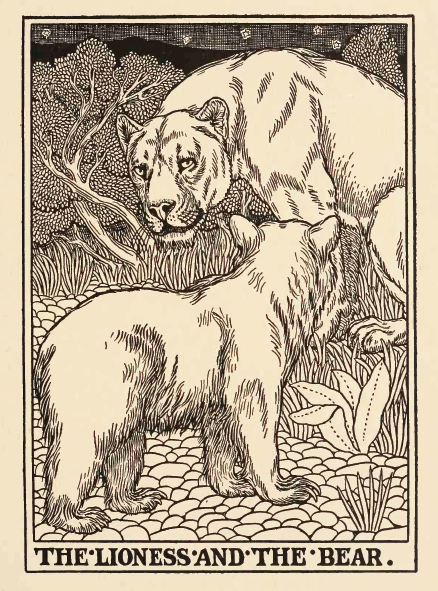
M0008. Leaena et Ursa


M0007 - M0008 + English - M0009

8. Leaena et Ursa. Erat leaena duos habens catulos. Exit autem ad venandum et venit quidam venator et catulos occidit et cum ipsorum pellibus discessit. Hoc videns, leaena contristata valde flebat. Ursa vero, tristitiam eius videns, venit ad eam dixitque ei, “Cur tristaris?” Illa respondit, “Quia venator catulos meos interfecit.” Ursa dixit, “Noli tristari; desine flere, quia passa es quod fecisti. Dic mihi, quid his annis comedisti?” Leaena respondit, “Carnes animalium.” Dixit ursa, “Quis tibi dabat?” Et ipsa, “Ego capiebam.” Et ursa, “Animalia quae capiebas parentes habebant?” Et illa, “Habebant.” Ursa ait, “Sic de filiis tristabantur ut tu nunc de tuis, et ipsa passa es sicut tu faciebas.” Haec audiens, leaena siluit et paenituit et, carnes comedere desinens, fructus manducare incepit.


Click here for a SLIDESHOW of all the Billinghurst images.

M0008 = Perry414. Source: Liber Kalilae et Dimnae 14.143 (shortened). This is Perry 414. In Greek versions of the fable, it is a wild boar who rebukes the lioness. For a fable about the bear’s own hypocrisy, see #130.

8. The Lioness and the Bear. There was a lion who had two cubs. She went out hunting and a certain hunter came and killed the cubs and went off with their skins. When she saw this, the lioness was sad and wept bitterly. A bear, seeing her sadness, came to her and said, "Why are you sad?" She answered, "Because a hunter killed cubs." The bear said, "Don't be sad; stop weeping. The fact is that you have suffered what you have done to others. Tell me, what have you been eating all these years?" The lioness replied, "The flesh of animals." The bear said, "Who gave the food to you?" And she said, "I caught my own food." And the bear said, "And the animals that you caught, did they have parents?" And she said, "They did." The bear said, "They grieved for their children as you now do for yours, and you yourself have now suffered just as you did to others." Hearing these things, the lioness was silent, and she repented: she stopped eating meat, and began to munch on fruits instead.


Friday, November 3, 2017

M0006. Leo et Equus


M0005 - M0006 + English - M0007

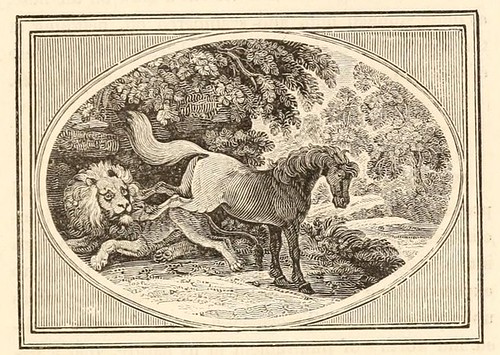
6. Leo et Equus. Venit ad equum comedendum leo. Carens autem prae senecta viribus, meditari coepit artem. Medicumque se esse profitetur verborumque ambagibus equum moratur. Equus dolo dolum, artem opponit arti; fingit se dudum in loco spinoso pupugisse pedem oratque ut inspiciens sentem medicus educat. Paret leo, at equus multa vi calcem leoni impingit et se continuo conicit in pedes. Leo, vix tandem ad se rediens, ictu enim prope exanimatus fuerat, “Pretium,” inquit, “fero ob stultitiam, et is iure effugit. Dolum enim dolo ultus est.”

Equus et Leo Medicus

Click here for a SLIDESHOW of all the Bewick images.

M0006 = Perry187. Source: Barlow’s Aesop 55. This is Perry 187. For another fable about an unexpected kick in the head, see #71.

The Lion and the Horse. A lion once came to eat a horse. On account of his old age, however, his strength was failing, so he laid a trap instead. He proclaimed that he was a doctor, and with long-winded speeches he detained the horse. The horse returned deceit for deceit, and trick for trick; he pretended that a while back he had pierced his foot in the brambles, and he begged that the doctor would take a look and remove the thorn. The lion obeyed, and with great force the horse hit the lion with his hoof and then immediately ran off. The lion finally regained consciousness after having been almost killed by the blow, and he said: I have paid the price for my stupidity, and he escaped fair and square, getting revenge for my trick with a trick of his own.

Monday, October 30, 2017

M0004. Leo et Tauri


M0003 - M0004 + English - M0005

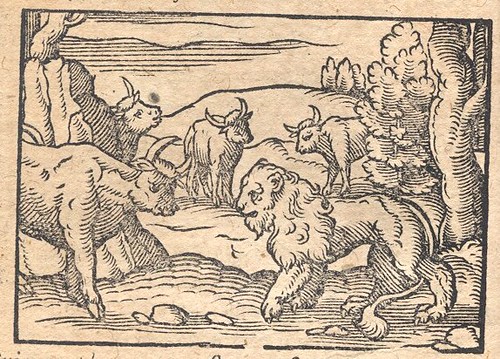
4. Leo et Tauri Duo. In duos tauros leo faciebat impetum, lautas sibi epulas quaerens. Illi, coniunctis viribus, opponunt cornua, medios ne irruere possit leo. Duobus ergo impar leo viribus, dolo agere coepit, sicque est allocutus alterum, “Amicum tuum si prodideris mihi, incolumem hinc ego te dimittam.” Qua usus fraude, facili utrumque necavit negotio.

Leo et Tauri - Osius

Click here for a SLIDESHOW of all the Osius images. Notice that in this illustration the lion has more to tangle with than just the two bulls in the Latin story.

M0004 = Perry372. Source: Syntipas 13 (translated into Latin). This is Perry 372. In some fables there are three bulls allied with one another, and in others there are four, but in all cases the lion is able to “divide and conquer.” Compare the fable of the cat, the eagle and the pig, #396.

4. The Lion and the Two Bulls. The lion attacked two bulls, hoping to enjoy a lavish feast. The two bulls joined forces and turned their horns against him so that the lion could not rush in between them. Unequal to the strength of the two of them, he resorted to a trick, and thus said to each one, "If you betray your ally to me, I will then let you go unharmed." By using this deception, it was an easy matter to kill them both.

Saturday, October 28, 2017

M0002. Leo Iratus et Puteus


M0001 - M0002 + English - M0003

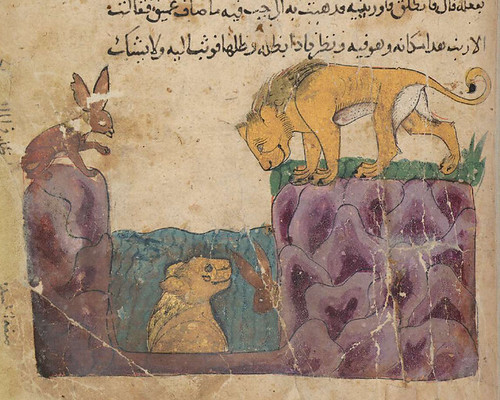
2. Leo Iratus et Puteus. Leo olim, iratus et odio furens, dum leonem alium elapsum quaerit quem mactet, in puteum offendit. Inspicit; suam imaginem in liquore pictam videt. Sibi credit hunc hostem adesse quem vult; irruit, et perit. Saepe furiosi plus sibi quam aliis nocent.


Leo et Puteus

Click here for a SLIDESHOW of all the Kalila-wa-Dimna images from this manuscript. This image does not match the Aesop exactly; here you see a more elaborate story where the rabbit purposefully leads the lion to the well, shows him the reflection, and prompts the lion to anger.

M0002 (not in Perry). Source: Desbillons 8.20 (adapted into prose). This fable is not in Perry’s catalog; in the Panchatantra there is an elaborate story about a rabbit who fools a lion into thinking that the lion’s reflection in a well is a rival lion. Compare the story of the dog and his reflection, #348.


2. The Angry Lion and the Well. Once upon a time a Lion, infuriated and raging with hatred, was chasing another lion who had gotten away in order to kill him and he ran into a well. He looked inside the well, and he saw his own image reflected the water. He believed that this was the enemy he sought; he attacked, and he died. Often those who are enraged do more harm to themselves than to others.

Monday, August 30, 2010

Illustrated: Asinus et Canis


M0220 - M0221 - M0222
221. Asinus et Canis. Asino, esculenta messoribus in agro portanti, occurrit herilis canis. Cui dixit, “Tu panibus cibisque onustus es quorum mox ego particeps ero; interim dum per viam incedis, tu ipse rubos comedis.” Huic asinus respondebat, “Frustula fortassis et ossa ad te pertinebunt; verum rubi quos ego comedo sunt gratiores mihi et magis meum palatum sapiunt quam omnes in macello carnes aut bellaria in pistorum officinis.”

Asinus et Carduus

Click here for a SLIDESHOW of all the Herrick images. This image does not show the dog, but it does show a donkey happily munching on thistles.

M0221 = Perry360. Source: Barlow’s Aesop 5. This fable is not in Perry’s catalog, although Perry 360 is about a fox who insults a donkey who is eating briars. Compare the story of the dog and the donkey who ran into a wolf, #354.

Saturday, August 28, 2010

Illustrated: Muli et Latrones


M0251 - M0252 - M0253
252. Muli et Latrones. Ibant muli duo sarcinis onusti. Alter fiscos cum pecunia, alter saccos hordei ferebat. Ille, cum onere superbiret, celsam cervicem iactat et clarum tintinnabulum in collo gerit. Comes placido gradu sequitur. Subito latrones ex insidiis advolant et mulum, qui argentum ferebat, ferro vulnerant, homines fugant, nummosque diripiunt. Alterius muli hordeum neglectum est. Cum igitur ille spoliatus et vulneratus casum suum defleret, “Equidem,” inquit alter, “gaudeo, quod contemptus sum. Ego nihil amisi neque vulnere laesus sum.”

Muli Duo

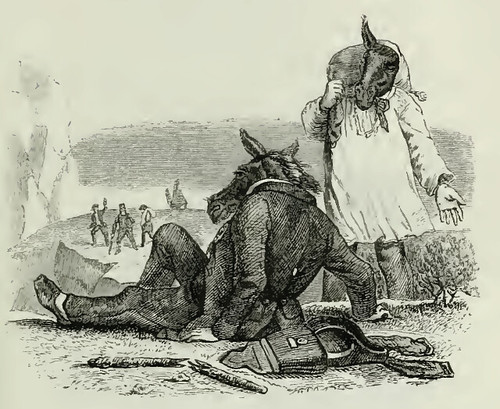
Click here for a SLIDESHOW of all the Grandville images. This is one of Grandville's marvelously anthropomorphic illustrations!

M0252 = Perry491. Source: Heidelberg 33. This is Perry 491. Compare a similar story about two travelers, #998.

Illustrated: Asinus et Tempora Anni


M0245 - M0246 - M0247
246. Asinus et Tempora Anni. Media hieme asinus, frigoris impatiens, ver tepidum tenerasque herbas desiderabat. Vere tamen redeunte, redibant etiam hominum et iumentorum labores. Deinde asinus, laboris impatiens, veris etiam odium suscepit, et multis precibus aestatis adventum orabat. Aestas autem maiores secum labores attulit. Tunc asinus, “O si autumnus rediret,” quotidie exclamabat. Autumni autem labores omnium gravissimi erant: poma in urbem, messes in horrea erant portanda. Itaque hiberna frigora autumni laboribus potiora videbantur. Non enim tempora anni vitam reddunt beatiorem, sed labores libenter suscipere.

Asinus et Herus

Click here for a SLIDESHOW of all the Medici Aesop images. This is an illustration for a different fable but it works well for the story of the donkey who labors all year long, too!

M0246 (not in Perry). Source: Potts & Darnell p. 6. This fable is not in Perry’s catalog; it is based on Abstemius 66, and Perry omitted most of Abstemius’s fables. Compare the fable of the donkey with different masters, #769.

Illustrated: Asinus et Domini Canis


M0242 - M0243 - M0244
243. Asinus et Domini Canis. Dominus asini habebat etiam catulum. Is a domino saepe laudabatur et permulcebatur, frustaque semper egregia ei dabantur. Hoc cum invidia videbat asinus. Cogitabat secum, “Cur canis ita amatur a domino? Cur ego male tractor? Ille inutilis est; ego maxima semper commoda domino comparavi. At canis callidus est adulator; a me dominus numquam blanditias accepit. Etiam ego amabor, si idem faciam quod ille facere solet.” Forte, hoc tempore dominus intrat in stabulum. Statim asinus accurrit rudens, pedes ponit in domini humeris, et faciem lata sua lingua lambere incipit. Exterritus dominus et iratus, vocat famulos qui fustibus asinum stultum misere mulcant; mulcatus, stultitiam suam deploravit. Quod catulum, non decet asinum.

Asinus et Domini Canis

Click here for a SLIDESHOW of all the Rabier images.
M0243 = Perry091. Source: Gildersleeve 17. This is Perry 91. Compare the fable of the mud-covered dog, #369.